


Start With Your Non-Negotiables
Every day's got anchors — things that can't move. Client calls at 2 PM. Team stand-up at 10 AM. School pickup at 3:30 PM. These aren't optional. They're the frame everything else hangs on.
Spend 10 minutes mapping these out. Don't estimate — use your actual calendar. You'll probably find you have less free time than you thought, which is useful information. Most people waste mental energy on tasks that fit into gaps that don't actually exist.
Once you've got these locked in, the planning gets easier. You're not managing 24 hours anymore — you're managing the 6-8 hours of actual discretionary time you've got. That's a totally different problem to solve.

The real insight: You don't have a time problem. You have a decision problem. Knowing where the blocks are lets you decide what fills the gaps.
The Three-Tier System That Actually Works
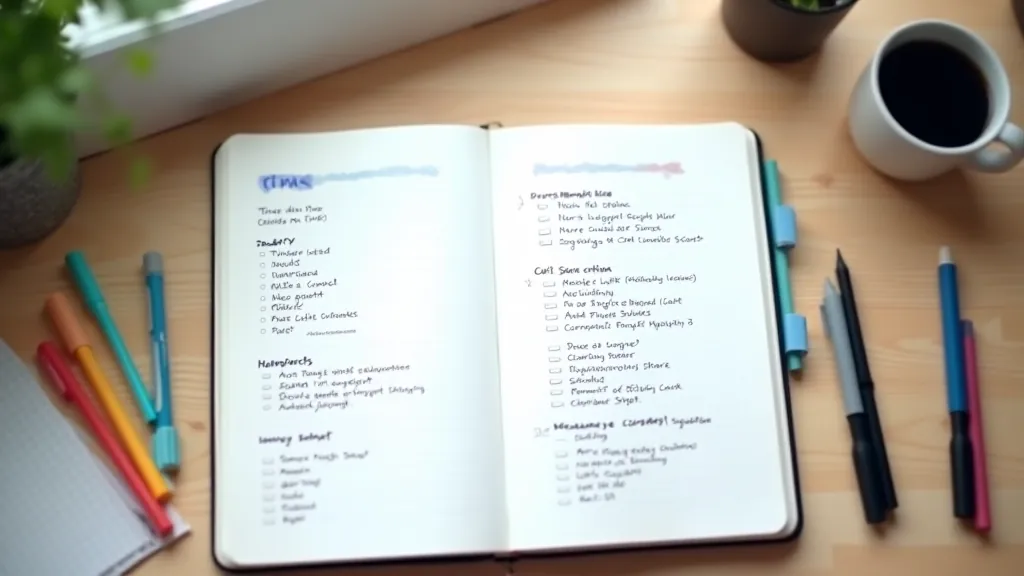
Here's a system that works because it's simple enough to actually use: three tiers. Tier One is what you must finish today — usually 2-3 things. Tier Two is what you should do if the day allows it — 4-5 items. Tier Three is the stuff that'd be nice but isn't critical.
The mistake most people make is putting everything in Tier One. Then they fail at their plan every single day, which kills motivation. You want to design a plan you can actually finish. That's the real win.
On a typical day, you'll hit Tier One and maybe 2-3 items from Tier Two. That's a solid day. Anything from Tier Three is a bonus. This reframes success: you're not failing because you didn't get to everything — you're succeeding because you got what actually mattered.
Time Blocking vs. Task Lists: Pick Your Weapon
There's this ongoing debate about whether you should block out time or just list tasks. Honestly? It depends on your job. A designer working on focused projects might time-block 2 hours for deep work. An account manager bouncing between calls probably won't — they're already blocked by meetings.
The important thing is knowing which one fits your reality. If you're constantly interrupted, time-blocking feels fake — you'll abandon it. If you've got stretches of uninterrupted time, a task list leaves you wandering between shallow work.
Most Cork professionals we've talked to use a hybrid: they time-block their focus work (usually 2-3 hour blocks in the morning) and task-list the flexible stuff (emails, admin, communication). That gives structure where it matters and flexibility where it's needed.

The Evening Review: 10 Minutes That Change Everything

The real magic isn't in the morning plan — it's in the evening review. Spend 10 minutes looking at what you said you'd do versus what you actually did. What got in the way? Was the plan unrealistic or was there a genuine interruption?
This isn't about guilt. It's about learning. After a few weeks, you'll notice patterns. You'll see that you always underestimate email or that 2 PM is when you actually hit your energy slump. That's information you can use tomorrow.
The evening review also helps you close out the day mentally. You're not carrying unfinished tasks into your evening because you've acknowledged them and moved them to tomorrow (or deleted them). That alone is worth the 10 minutes.
Pro tip: Do this review before you leave work. Don't carry your to-do list home with you. The plan lives in the system, not in your head.
Putting It Together: Your First Week
You don't need a fancy system. You don't need to buy apps or journals or templates. But you do need to pick something and actually do it for a week. That's the real barrier — consistency beats perfection every time.
That's it. You're not aiming for a perfect system. You're aiming for one that's honest about how you actually work. The system that works is the one you'll use, not the one that looks best on Instagram.